
When PCOS hits, suddenly you’re bombarded with medical jargon like Metformin this, Ozempic that. But what’s actually happening in your body?
In simple terms, PCOS often messes with your insulin (the hormone that controls blood sugar). When your body ignores insulin (called insulin resistance), your blood sugar spikes, your ovaries pump out too many male hormones (hello, acne and unwanted hair!), and weight loss feels impossible.
Metformin helps by making your body respond better to insulin, lowering blood sugar and sometimes helping with weight. Ozempic works differently—it slows digestion, tricks your brain into feeling full, and also improves insulin sensitivity. Both help with PCOS symptoms, but Ozempic tends to have a bigger impact on weight loss, while Metformin is older, cheaper, and often tried first.
Think of it like this:
- Metformin = Fixes the engine (insulin) so it runs smoother.
- Ozempic = Fixes the engine and puts less fuel (food) in the tank.
Right now, Metformin is still the go-to for most doctors when treating PCOS, especially if insulin resistance is a big issue. It’s been around for decades, is well-studied, and is way cheaper (like, pennies compared to Ozempic’s $$$ price tag). Plus, it’s FDA-approved for diabetes and often prescribed off-label for PCOS.
But Ozempic is gaining hype fast, and here’s why:
- Better Weight Loss – Ozempic is a powerhouse for dropping pounds, while Metformin’s weight effects are usually milder.
- Fewer Gut Issues – Metformin can cause nasty stomach cramps/diarrhea for some, while Ozempic’s side effects (like nausea) often ease over time.
How Ozempic Works for PCOS
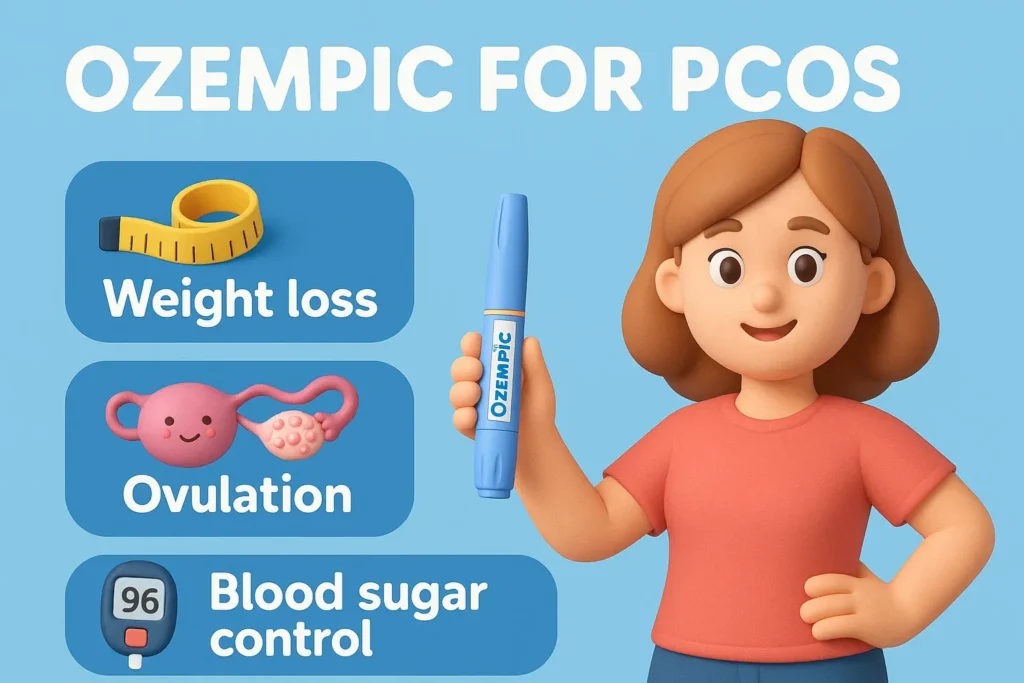
Ozempic mimics GLP-1, a hormone that does three key things to help PCOS:
✅ Slows Down Digestion → Keeps food in your stomach longer → Makes you feel full faster → Reduces cravings & overeating.
✅ Boosts Insulin Sensitivity → Helps your body use insulin better → Lowers blood sugar & reduces insulin resistance (a major PCOS driver).
✅ Suppresses Glucagon → A hormone that raises blood sugar → Prevents sugar spikes.
What’s Ozempic Made Of?
- Active Ingredient: Semaglutide – A synthetic version of GLP-1 (Glucagon-Like Peptide-1), a natural gut hormone.
- Form: Injectable solution (pre-filled pen) given once weekly.
- Dosage: Starts at 0.25 mg/week, gradually increasing to 0.5 mg, 1 mg, or 2 mg based on tolerance and effect.
- Other Ingredients: Includes preservatives (like phenol) and stabilizers to keep the solution effective.
Ozempic vs. Metformin: How Do Their Compositions & Mechanisms Compare?
| Feature | Ozempic (Semaglutide) | Metformin |
|---|---|---|
| Type of Drug | GLP-1 Receptor Agonist (injectable) | Biguanide (oral tablet) |
| Main Action | Mimics GLP-1 to slow digestion, suppress appetite, and improve insulin use | Reduces liver glucose production & improves insulin sensitivity |
| Weight Loss | Strong effect (avg. 10-15% body weight loss) | Mild effect (avg. 2-5% body weight loss) |
| Side Effects | Nausea, vomiting, constipation (usually fades) | Diarrhea, bloating, stomach cramps (can be persistent) |
| Cost | Expensive (~$900/month without insurance) | Cheap (~$4/month with generic versions) |
The Origin of Ozempic: From Diabetes Drug to Viral Weight-Loss Sensation
1. How Ozempic Was Created
- Developed by: Novo Nordisk, a Danish pharmaceutical giant known for diabetes medications.
- Original Purpose: Designed as a GLP-1 receptor agonist to treat type 2 diabetes by improving blood sugar control.
- FDA Approval:
- First approved in 2017 for diabetes under the brand name Ozempic (semaglutide).
- Later, a higher-dose version (Wegovy, 2.4 mg) was approved in 2021 specifically for weight loss.
2. How Ozempic Went from Diabetes Med to Pop Culture Phenomenon
Ozempic’s explosion in popularity wasn’t just medical—it became a social media and celebrity-fueled craze. Here’s how:
✅ Weight Loss Side Effect Goes Viral
- While testing Ozempic for diabetes, researchers noticed users lost significant weight—far more than with older drugs.
- Novo Nordisk capitalized on this by releasing Wegovy, the same drug but marketed for obesity.
✅ Celebrities & Influencers Jump on the Trend
- Rumors swirled that A-listers (like Elon Musk and Hollywood stars) were using Ozempic/Wegovy for rapid weight loss.
- TikTok and Instagram are flooded with #OzempicWeightLoss before-and-after stories, making it a household name.
The Risks & Downsides of Ozempic: What You Need to Know
Ozempic (semaglutide) may be a game-changer for weight loss and PCOS, but it’s not without risks—some serious. Before considering it, here’s a breakdown of the potential dangers.
1. Common Side Effects (Mostly Digestive)
Most users experience some level of stomach upset, which can improve over time but may be severe for some:
- Nausea (44% of users)
- Vomiting (24%)
- Diarrhea (30%)
- Constipation (24%)
- Abdominal pain (20%)
Why? Ozempic slows digestion, which can lead to bloating, reflux, and discomfort. Some people adjust after a few weeks, but others struggle long-term.
2. Serious (But Rare) Risks
While uncommon, these complications require immediate medical attention:
1. Pancreatitis (Inflammation of the Pancreas)
- Symptoms: Severe abdominal pain, vomiting, fever
- Risk: Low but real—Ozempic has been linked to acute pancreatitis in rare cases.
2. Gallbladder Issues (Gallstones, Bile Duct Blockages)
- Rapid weight loss can trigger gallstones, leading to pain, nausea, and sometimes surgery.
3. Thyroid Cancer Risk (Controversial but Warned)
- In animal studies, semaglutide caused thyroid C-cell tumors (in rats).
- Human risk? Unknown—but Ozempic carries an FDA black box warning for those with a family history of medullary thyroid cancer (MTC) or MEN-2 syndrome.
4. Low Blood Sugar (Hypoglycemia)
- More likely if combined with other diabetes meds (like insulin).
- Symptoms: Dizziness, confusion, sweating, fainting.
5. Kidney Problems
- Severe vomiting/diarrhea can lead to dehydration, worsening kidney function (especially in those with pre-existing kidney disease).
3. Long-Term Unknowns
Since Ozempic hasn’t been used widely for PCOS or long-term weight loss, we don’t yet know:
- What happens if you stop taking it? (Many regain weight quickly.)
- Does it affect fertility long-term? (Early data suggests it may help PCOS-related infertility, but more research is needed.)
- Could there be heart or neurological risks after years of use?
4. The “Ozempic Face” & Muscle Loss
- Rapid weight loss can cause sagging skin, hollow cheeks, and an aged appearance (dubbed “Ozempic face”).
- Without proper protein intake and exercise, users may lose muscle mass along with fat.
Ozempic for PCOS: Your Questions Answered
Medical Disclaimer: The content provided is for educational use and does not replace professional medical guidance. Speak with your healthcare provider before considering Ozempic or any treatment.