
Follicular cysts are the most common type of ovarian cyst, arising as a normal part of the menstrual cycle. Each month, an egg develops within a small fluid-filled sac called a follicle on the ovary. Typically, around the middle of the cycle, this follicle ruptures to release the egg (ovulation). However, if the follicle fails to rupture and continues to grow, it can form a follicular cyst.
These cysts are usually benign (non-cancerous) and often resolve on their own within a few weeks or months without any intervention. Many women have them without ever knowing, as they frequently cause no symptoms. However, when they grow larger, rupture, or twist the ovary (a rare but serious complication called ovarian torsion), they can manifest a variety of symptoms. Recognizing these signs can help you decide when to seek medical attention.
Common Symptoms of Follicular Cysts
Follicular Cyst Symptom Questionnaire
Please indicate “Yes” by checking the box if you are experiencing the symptom, or leave it unchecked for “No”.
Note: This questionnaire is for informational purposes only and does not replace a medical diagnosis from a healthcare professional.
Important Note: If you experienced any of the “Other Symptoms” (questions 11-14) or have persistent/worsening symptoms, please seek immediate medical attention.
While many follicular cysts are silent, those that do cause symptoms often present with the following:
1. General Abdominal/Pelvic Sensations
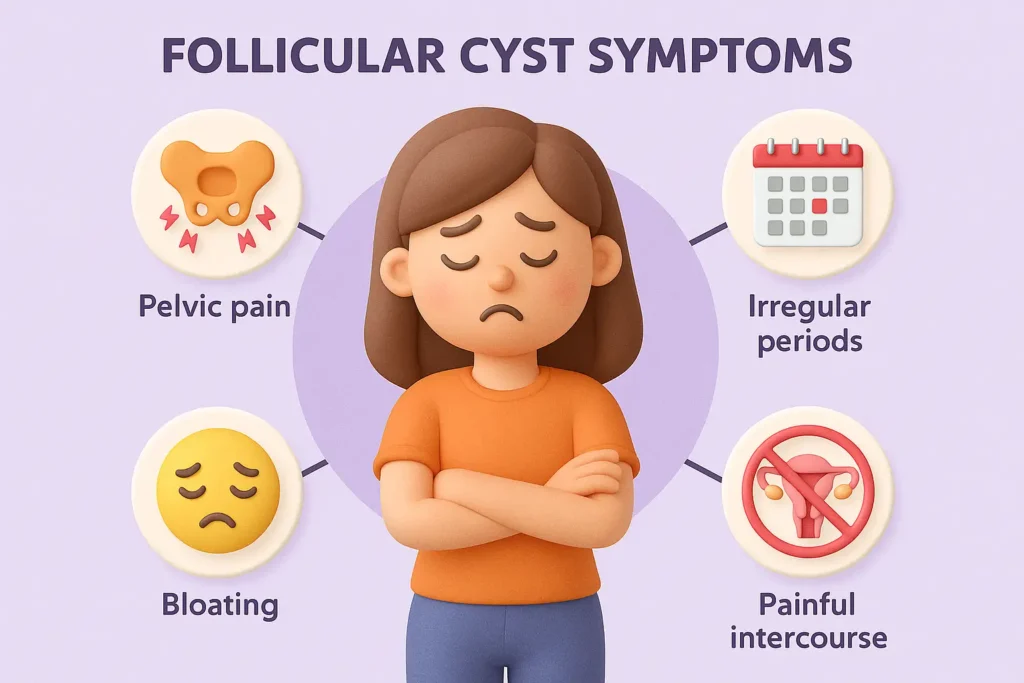
- New or Unusual Pain in the Lower Abdomen or Pelvic Area: This is one of the most frequently reported symptoms. The pain can vary significantly in nature and intensity:
- Dull Ache: A persistent, low-grade discomfort that might be easily ignored initially but becomes noticeable over time.
- Sharp or Stabbing Pain: More intense, localized pain that can come and go. This is particularly concerning if sudden and severe.
- Location: Pain is often felt on one side of the lower abdomen, corresponding to the ovary where the cyst is located.
- Intermittent vs. Constant: The pain might be present only occasionally, or it could be a continuous presence.
- Feeling of Fullness, Pressure, or Bloating in Your Abdomen: A cyst, especially a larger one, can take up space in the pelvis, leading to a sensation of abdominal distension or a feeling of being “full.” This can be distinct from typical digestive bloating.
- Feeling Full Quickly After Eating Only a Small Amount of Food: Large cysts can sometimes press on the stomach or intestines, leading to early satiety, meaning you feel full even after consuming only a small quantity of food.
2. Menstrual Cycle Changes
Since follicular cysts are directly related to the menstrual cycle and hormonal activity, they can influence your periods:
- Changes in Menstrual Periods:
- Heavier or Lighter Bleeding: The volume of menstrual flow might change unexpectedly.
- Irregular Periods: Your cycle length might become unpredictable, with periods coming earlier or later than usual, or even being missed entirely.
- More Painful Periods (Dysmenorrhea): While period pain is common, a noticeable increase in severity could be a symptom.
- Unusual Spotting or Bleeding Between Periods: Any bleeding outside of your regular menstrual flow should be investigated, as it can be a sign of hormonal imbalance caused by the cyst.
3. Pain During Activities
Certain physical activities can exacerbate discomfort or pain caused by a follicular cyst:
- Pain During Sexual Intercourse (Dyspareunia): Deep penetration can put pressure on the ovaries, leading to discomfort or sharp pain if a cyst is present.
- Pain During Bowel Movements: Similar to sexual activity, pressure from bowel movements can sometimes cause discomfort if a cyst is positioned in a way that it interferes with the rectum or intestines.
4. Urinary and Bowel Habits
As ovarian cysts grow, they can press on neighboring organs, including the bladder and bowel, leading to changes in their function:
- Frequent or Increased Urge to Urinate: A cyst pushing on the bladder can reduce its capacity or irritate it, leading to a more frequent need to ur urinate.
- Difficulty Completely Emptying Your Bladder: The pressure from a cyst might prevent the bladder from fully emptying, leading to a sensation of incomplete voiding.
- Changes in Your Bowel Habits: This can manifest as:
- Constipation: Pressure on the intestines can slow down bowel transit.
- Difficulty Passing Stools: Discomfort or obstruction due to the cyst’s presence.
Understanding Why These Symptoms Occur
The symptoms associated with follicular cysts arise primarily from:
- Size and Pressure: As a follicle grows larger than typical, it creates a mass that can exert pressure on surrounding organs like the bladder, bowel, and pelvic nerves, leading to pain, discomfort, and changes in bodily functions.
- Hormonal Fluctuations: Follicular cysts are actively producing hormones (estrogen), which can disrupt the delicate hormonal balance governing the menstrual cycle, leading to irregularities in periods, spotting, and breast tenderness.
- Complications: While less common, the most severe symptoms arise from complications such as:
- Cyst Rupture: The cyst bursts, spilling fluid into the abdominal cavity. This can cause sudden, sharp, and often severe pain. The pain can be localized or generalized and may be accompanied by nausea and vomiting. In some cases, a ruptured cyst can lead to internal bleeding, causing dizziness, weakness, and even shock.
- Ovarian Torsion: A large cyst can cause the ovary to twist around its supporting ligaments, cutting off its blood supply. This is a medical emergency that causes sudden, excruciating abdominal pain, often with nausea, vomiting, fever, and signs of shock.
When to Seek Medical Attention
While most follicular cysts resolve on their own, it’s always wise to consult a healthcare professional if you experience any of the symptoms mentioned above, especially if they are persistent, worsening, or new.
Seek IMMEDIATE medical attention if you experience any of the following severe symptoms:
- Sudden, severe abdominal or pelvic pain that came on very quickly.
- Abdominal pain accompanied by fever or vomiting.
- Feeling light-headed, dizzy, or weak.
- Rapid breathing without exertion.
These urgent symptoms could indicate a ruptured cyst or ovarian torsion, which are time-sensitive medical emergencies requiring prompt diagnosis and treatment.