
PCOS. The acronym that often brings to mind irregular or missed periods, maybe some unwanted hair growth, and the dreaded “cysts on your ovaries” image. But what if you’ve been diagnosed with Polycystic Ovary Syndrome (PCOS) and your menstrual cycle is, well, pretty normal? Confused? You’re not alone.
For a long time, the general understanding, even within the medical community, heavily emphasized irregular periods as a key diagnostic criterion for PCOS. And while it’s true that many individuals with PCOS experience significant menstrual disturbances, it’s crucial to understand that regular periods do not automatically rule out a PCOS diagnosis.
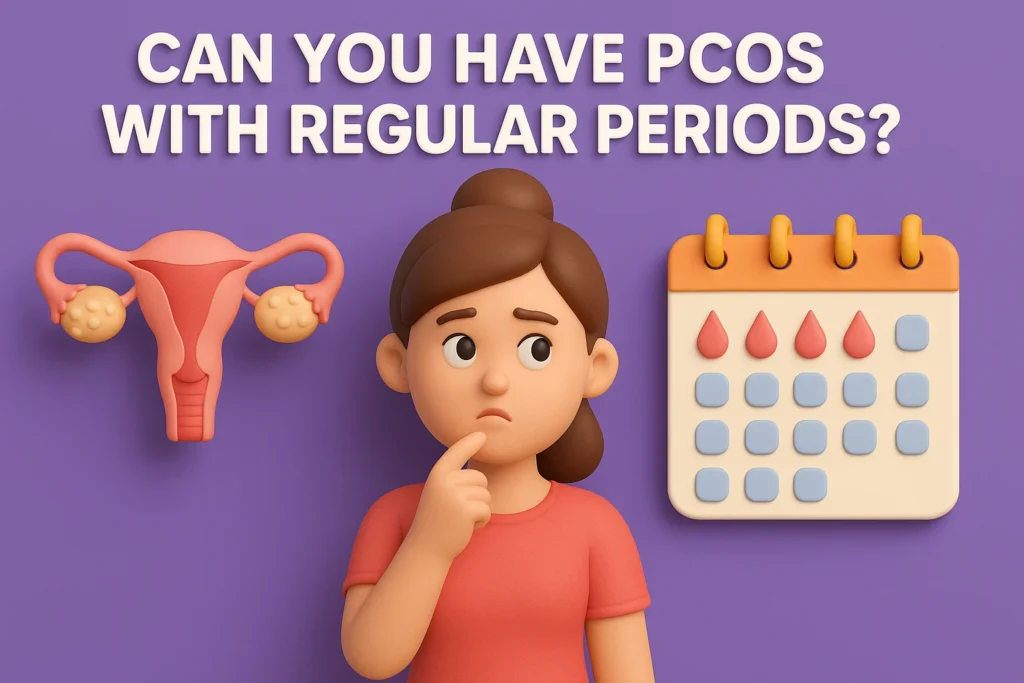
This might seem counterintuitive. How can you have a condition that literally translates to “many cysts on the ovaries” and is often linked with hormonal imbalances affecting ovulation, yet still have a predictable cycle? The answer lies in the diagnostic criteria for PCOS, primarily the Rotterdam criteria.
The Rotterdam Criteria: More Than Just Irregular Cycles
According to the most widely used Rotterdam criteria, a diagnosis of PCOS can be made if a woman meets at least two out of the following three criteria:
- Oligo-ovulation and/or anovulation: This refers to infrequent or absent ovulation, which often leads to irregular periods. This is the criterion most people associate with PCOS.
- Clinical and/or biochemical signs of hyperandrogenism: This means having high levels of androgens (often referred to as “male hormones”) in the body. Clinically, this might manifest as excess facial or body hair (hirsutism), acne, or male-pattern baldness. Biochemically, it’s confirmed through blood tests showing elevated androgen levels.
- Polycystic ovaries on ultrasound: This refers to the presence of 12 or more follicles (small sacs containing eggs) on each ovary, typically seen during an ultrasound examination.
Notice anything important? Regular periods (implying regular ovulation) only address the first criterion. You can absolutely have regular ovulation and still meet the criteria for PCOS if you exhibit signs of hyperandrogenism and/or have polycystic ovaries on ultrasound.
Why Might This Happen?
The exact reasons why some individuals with PCOS have regular periods while others don’t are still being researched. However, some potential factors include:
- Milder hormonal imbalances: You might have slightly elevated androgens, enough to cause other symptoms like mild hirsutism or acne, but not enough to completely disrupt ovulation.
- Different subtypes of PCOS: Research suggests that PCOS isn’t a single condition but rather a spectrum with different underlying hormonal profiles and symptom presentations. Some subtypes might be characterized by more regular cycles than others.
- Lifestyle factors: In some cases, healthy lifestyle choices like maintaining a balanced diet and regular exercise might help regulate the menstrual cycle even in the presence of other PCOS indicators.
Why is it Important to Know This?
Understanding that regular periods don’t exclude PCOS is crucial for several reasons:
- Accurate diagnosis: If healthcare professionals only focus on irregular periods, individuals with other PCOS symptoms and regular cycles might be misdiagnosed or have their concerns dismissed.
- Timely management: Even with regular periods, PCOS can still have long-term health implications, such as increased risk of insulin resistance, type 2 diabetes, high blood pressure, and heart disease. Early diagnosis allows for proactive management of these risks.
- Addressing other symptoms: If you have regular periods but struggle with other PCOS symptoms like acne, excess hair growth, or hair thinning, knowing that these can still be linked to PCOS can lead you to seek appropriate treatment.
- Fertility considerations: While regular ovulation is a positive factor for fertility, other aspects of PCOS can still impact conception. Understanding the full picture is important for family planning.
What Should You Do If You Suspect PCOS Despite Regular Periods?
If you have concerns about PCOS due to symptoms like acne, hirsutism, or a family history of the condition, even if your periods are regular, it’s essential to:
- Track your cycle: Keep a record of your menstrual cycles, noting any changes.
- Note any other symptoms: Be mindful of any signs of hyperandrogenism or other health issues.
- Consult a healthcare professional: Talk to your doctor, gynecologist, or an endocrinologist. Be prepared to discuss your symptoms and family history. They may recommend blood tests to check your hormone levels and an ultrasound to examine your ovaries.
The Takeaway:
PCOS is a complex condition with diverse presentations. While irregular periods are a common symptom, they are not the only indicator. Having regular menstrual cycles doesn’t automatically mean you don’t have PCOS. If you have other symptoms or concerns, don’t hesitate to seek medical advice. Getting an accurate diagnosis is the first step towards managing your health and well-being effectively.
PCOS with Regular Periods: Debunking the Myth – Your FAQs
Can you have PCOS even if your periods are regular?
Yes, absolutely. While irregular or missed periods are a common symptom of Polycystic Ovary Syndrome (PCOS), they are not the only diagnostic criterion. According to the widely used Rotterdam criteria, a PCOS diagnosis can be made if you meet at least two out of three criteria, and regular periods only address one of these. It’s possible to have regular cycles and still exhibit other signs of PCOS, such as elevated androgen levels or polycystic ovaries on ultrasound.
What are the official diagnostic criteria for PCOS?
- Oligo-ovulation and/or anovulation: This means infrequent or absent ovulation, often leading to irregular periods.
- Clinical and/or biochemical signs of hyperandrogenism: This refers to high levels of androgens (male hormones), which can manifest as excess facial/body hair (hirsutism), severe acne, or male-pattern hair loss, or be confirmed by blood tests.
- Polycystic ovaries on ultrasound: This involves the presence of 12 or more small follicles (2-9mm in diameter) on each ovary, or an increased ovarian volume (over 10ml), as seen during an ultrasound scan.
What are clinical or biochemical signs of hyperandrogenism?
- Hirsutism: Excess coarse, dark hair growth in a male-pattern distribution (e.g., on the face, chest, back, abdomen).
- Severe Acne: Persistent or severe acne, especially beyond adolescence.
- Androgenic Alopecia: Male-pattern hair loss or thinning on the scalp.
Do I need to have ‘cysts’ on my ovaries to be diagnosed with PCOS?
Despite the name ‘Polycystic Ovary Syndrome,’ the ‘cysts’ referred to are actually small, immature follicles, not true cysts in the medical sense that require removal. While polycystic ovaries on ultrasound are one of the diagnostic criteria, you do not have to have them to be diagnosed with PCOS. As long as you meet two of the three Rotterdam criteria (hyperandrogenism and/or irregular periods, and polycystic ovaries), you can receive a diagnosis. Some individuals may have PCOS without the characteristic ovarian appearance.
Why is it important to know if I have PCOS, even with regular periods?
An accurate diagnosis is crucial for comprehensive health management. Even with regular periods, PCOS can increase your risk for long-term health complications such as insulin resistance, type 2 diabetes, high blood pressure, high cholesterol, and heart disease. Early diagnosis allows for proactive lifestyle interventions and monitoring to mitigate these risks. It also ensures appropriate treatment for other bothersome symptoms like acne or unwanted hair growth, and can inform fertility planning.
What should I do if I suspect PCOS but my periods are regular?
If you experience other symptoms commonly associated with PCOS (like persistent acne, excess hair growth, or scalp hair thinning) or have a family history of the condition, even with regular periods, it’s important to consult a healthcare professional. This could be your primary care doctor, a gynecologist, or an endocrinologist. Be prepared to discuss all your symptoms and family medical history. They may recommend hormone blood tests and an ultrasound to assess your ovaries and confirm a diagnosis.