
You’re working out. You’re eating clean. But that stubborn belly? It’s still there—mocking your efforts like a bad ex who just won’t leave.
This isn’t diet-induced. It’s hormone-induced.
Here’s the truth that hits hard: it’s not your fault. If you have PCOS, your body is playing by a different set of rules. Trying to follow generic fitness advice or obsessing over every calorie only leads to one thing—burnout and disappointment. And then comes the stress spiral: “Why is this not working? What else should I cut out? Should I go keto? Should I eat less?”
No, no, and no.
First, breathe. The weight gain—especially the belly fat—isn’t about discipline. It’s hormonal, and accepting this reality is the first real step toward managing it. That doesn’t mean giving up; it means understanding the terrain before climbing the mountain. PCOS makes your body more resistant to weight loss, especially in the abdominal area, due to insulin resistance and elevated cortisol. And guess what makes cortisol spike higher? Yep—stress.
Every time you stress about not losing weight, you’re feeding the very hormone that’s keeping the weight stuck. It’s like running on a treadmill that never powers off. You try harder, your body panics more, and the fat clings tighter.
How PCOS tricks your brain.
Your body and brain are supposed to be on the same team. But with PCOS, it’s like they’re not even speaking the same language. Hormones send mixed signals, and the brain misreads them. The result? Your brain thinks you’re in constant survival mode.
Let’s break it down.
- Your insulin is high → brain thinks you need to store more fat.
- Your cortisol is high → brain thinks there’s a threat → stores fat for “emergency.”
- Your progesterone is low → brain misses its calming signals → anxiety kicks in.
- Your estrogen is fluctuating → mood swings, cravings, low energy follow.
So now you’ve got a body holding onto weight and a brain saying, “Something’s wrong. Save energy. Hold fat. Panic a little.”
See the problem?
Even if you’re eating well, working out, and doing “everything right,” your brain is stuck in protect-and-preserve mode. It’s not allowing the body to let go of fat, especially around the belly, because it thinks that fat is the fuel for hard times ahead.
Let’s stop sugarcoating PCOS like it’s just “a bit of hormonal imbalance.” It’s a full-body miscommunication system, and the real chaos starts in the control room—your brain.
What Needs to Be Fixed in PCOS?
Let’s break it down like a faulty wiring diagram.
PCOS isn’t just about the ovaries. That’s just where the symptoms show up. The root problems? Brain signals, hormones, and metabolic confusion. Here’s what’s off and what needs fixing:
1. Brain-Ovary Miscommunication
The brain talks to your ovaries using hormones called LH (Luteinizing Hormone) and FSH (Follicle-Stimulating Hormone). In a healthy cycle, these two take turns like a dance.
In PCOS, the brain sends too much LH and not enough FSH. That throws the rhythm off, and instead of releasing a mature egg, the ovaries just collect partially developed follicles—those tiny cysts.
Fix this: You need to rebalance LH and FSH by improving insulin sensitivity, reducing inflammation, and supporting ovulation.
First, Why Does LH and FSH Balance Even Matter?
In a healthy body:
- FSH (Follicle-Stimulating Hormone) helps grow the egg.
- LH (Luteinizing Hormone) helps release it (ovulation).
In PCOS, the brain sends too much LH and not enough FSH. This leads to:
- No proper egg maturation
- No ovulation
- Cysts building up
- More testosterone
- Missed or irregular periods
How to Rebalance These Hormones Naturally:
1. Improve Insulin Sensitivity
High insulin messes with LH and FSH. Fixing insulin is the first domino.
How to do it:
- Eat balanced meals: Every meal should include protein + fiber + healthy fat. This keeps your blood sugar stable.
- Avoid sugar crashes: Ditch soda, white bread, and anything that spikes and crashes your blood sugar like a rollercoaster.
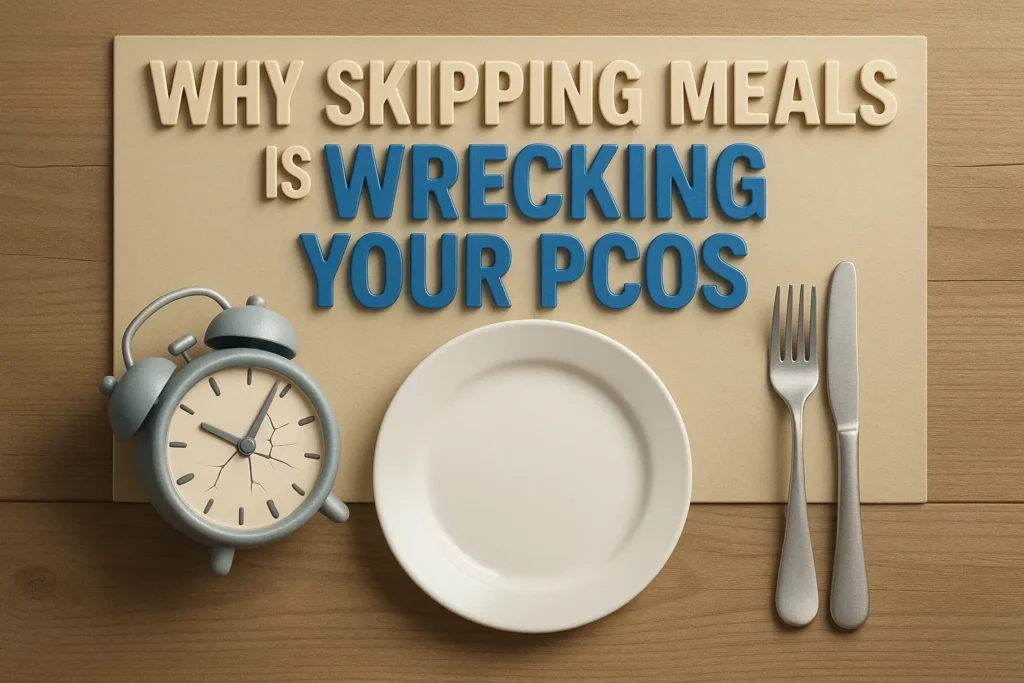
- Don’t skip meals: Skipping meals stresses your body and boosts cortisol, which worsens insulin resistance.
- Try Inositol (especially Myo-Inositol + D-Chiro): A supplement proven to help insulin resistance and improve ovulation in PCOS women.
- Move daily: Walking after meals, strength training 3–4x a week, or even simple movement reduces insulin resistance.
2. Reduce Chronic Inflammation
Inflammation is the sneaky villain that keeps your hormones misfiring.
How to reduce it:
- Cut ultra-processed food: Ditch the chips, packaged snacks, and deep-fried junk.
- Add anti-inflammatory foods: Think turmeric, leafy greens, omega-3s (fatty fish, chia, flaxseed), berries, and olive oil.
- Fix your gut: A messed-up gut = chronic inflammation. Add fermented foods like yogurt, kefir, kimchi—or take a quality probiotic.
- Sleep 7–9 hours a night: Lack of sleep = inflammation on steroids.
- Don’t over-exercise: High-intensity workouts every day can inflame a PCOS body. Mix in rest days or gentler workouts like yoga or walking.
3. Support Ovulation
Ovulation is like the thermostat for your entire hormonal system. No ovulation = no progesterone = mood swings, irregular periods, and belly fat.
How to bring it back:
- Eat enough: Undereating is a fast way to shut down ovulation. Your body needs to feel “safe” to release an egg.
- Track your cycle: Use apps or basal body temperature to see if and when you’re ovulating. Track it here
- Reduce stress: Chronic stress tells your brain, “Not a good time to make a baby,” and ovulation goes MIA.
- Seed cycling (optional): Some women swear by flaxseed and pumpkin in the first half of the cycle, sesame and sunflower in the second half. It’s not magic, but it supports hormonal rhythm.
- Adaptogens (with caution): Herbs like ashwagandha and maca can support hormonal balance, but always check with your doctor.
2. Insulin Resistance Hijacks Everything
Insulin isn’t just about blood sugar. It messes with your hormones too.
When your body stops responding to insulin properly, the pancreas keeps making more. And that extra insulin?
- Tells ovaries to make more testosterone
- Tells fat cells to store more belly fat
- Tells your brain to keep the period on pause
Fix this: Control insulin. Not by cutting all carbs, but by eating smart carbs, timing meals, and moving your body in ways that reduce resistance.
You don’t have to fear carbs. You have to outsmart insulin.
The goal isn’t to eliminate entire food groups rather it’s to stop insulin from acting like an overexcited manager who keeps storing everything you eat as belly fat. With PCOS, your cells become resistant to insulin’s signals, so your body just keeps producing more and more of it. High insulin = high testosterone = more symptoms + more belly fat + more hormone chaos.But here’s the fix: teach your body how to listen to insulin again.
- Understand carb quality over carb drama: Not all carbs are villains. Processed ones spike your insulin. But slow, complex carbs—like sweet potatoes, oats, and lentils—give your body stable energy. They’re not the problem. The problem is when and how you eat them.
- Don’t let your blood sugar ride a rollercoaster: Big meals after long gaps, especially carb-heavy ones, confuse your insulin system even more. Break that pattern. Your body likes rhythm. Smaller, balanced meals throughout the day send the message: “All good here, no need to hoard fat.”
- Use food order hacks: Eat fiber and protein first, carbs last. It slows the glucose spike and keeps insulin from overreacting. Yes, even if you’re eating rice.
- Walk your insulin back into balance: You don’t need an intense gym routine. A 15-minute walk after meals can lower your blood sugar significantly. This simple habit can make your cells more insulin-sensitive over time—and you don’t even need workout clothes.
- Give your metabolism “rest time” between meals: Constant snacking keeps insulin slightly elevated all day. Create clear breaks between meals to let it drop. You’re not “starving” your body—you’re giving it space to function properly.
- Cut sneaky insulin triggers: It’s not just sugar and soda. Chronic sleep debt, high-stress environments, and even artificial sweeteners can spike insulin levels. Fixing insulin isn’t just a diet issue. It’s a full-system adjustment.
Bottom line: You’re not “eating wrong.” Your body just needs to remember how to respond to the food you’re giving it. Once insulin calms down, everything else such as testosterone, cravings and belly fat starts falling into place. Not with extremes. But with small, consistent shifts your body can actually trust.
3. Cortisol Keeps the Body in Emergency Mode
PCOS bodies are super sensitive to stress. When you’re anxious, sleep-deprived, or even over-exercising, cortisol (your stress hormone) stays high. This tells your brain: “Hold the fat. Hold the eggs. This isn’t a good time to function normally.”
Fix this: You can’t meditate PCOS away, but you can train your nervous system to feel safe—by sleeping better, cutting caffeine crashes, slowing down workouts, and finding daily ways to reduce stress (even if it’s ugly crying in the car for 5 minutes).
You can’t meditate PCOS away, but you can retrain your nervous system to stop treating everyday life like a crisis. PCOS makes your body more reactive to stress—mentally and physically. Even small things—traffic, deadlines, arguments, social pressure—can push your body into a fight-or-flight state that keeps your cortisol high and hormones out of whack.
The trick isn’t to become a zen monk. The trick is to build small habits that signal safety to your brain.
- Create a “no chaos” hour: Pick one hour a day with no screen, no work talk, no multitasking. Just slow, boring, calm time. It could be walking, journaling, staring at plants—whatever doesn’t stimulate you.
- Use physical grounding: When anxiety kicks in, your brain floats. Ground yourself back in your body. Hold ice cubes. Stretch your feet. Do a long exhale—try 4 seconds in, 8 seconds out. This teaches your nervous system that you’re not being chased by a lion, just dealing with a late invoice.
- Tactile calmers work: Clay, knitting, brushing your hair slowly, painting—not because you’re “doing something productive,” but because repetitive touch resets brain circuits.
- Build micro-routines: Light a candle before bed. Put on the same calming playlist when driving. Do 3 shoulder rolls before starting work. These tiny rituals anchor your day and tell your body, “We’re safe. Nothing’s on fire.”
- Watch your input: Bad news, gossip, doom-scrolling—this is all stress input your brain doesn’t know how to filter. Curate what you allow into your headspace. Turn off news alerts. Mute the drama. Give your brain peace so it stops prepping for imaginary war.
- Laugh. On purpose. Not kidding. Laughter (even fake at first) lowers cortisol, improves insulin response, and calms your nervous system fast. Find something stupidly funny and rewatch it. It’s medicine, not a waste of time.
4. Low Progesterone = No Chill Mode
In a healthy cycle, progesterone rises after ovulation. It’s the hormone that helps you sleep, stay calm, and reduce bloating. In PCOS, many women don’t ovulate, which means no progesterone spike. The brain doesn’t get its “chill pill,” so anxiety, PMS, and insomnia kick in.
Fix this: Support ovulation naturally through lifestyle changes, or with medical help if needed.
When you don’t ovulate, you don’t make enough progesterone. That throws everything off: your mood, sleep, skin, weight, even your ability to handle stress. In PCOS, anovulation (lack of ovulation) is common—not because your body is broken, but because it’s overloaded, confused, and under-supported.
You can’t force ovulation. But you can create the right conditions for it to return naturally.
- Fuel your body, don’t starve it: If your body thinks food is scarce, it won’t risk ovulating. That’s biological survival. So restrictive diets and over-exercising? They backfire. Ovulation needs steady fuel especially healthy fats and enough calories.
- Make your body feel safe: Your brain won’t signal for ovulation if it senses chaos. That means cutting back on overwork, late nights, emotional burnout. You need rhythm and recovery. Your body isn’t lazy rather it’s waiting for the green light.
- Balance your workouts: Intense exercise every single day can actually delay ovulation in PCOS. Instead, cycle your workouts. Strength training, walking, yoga, and rest days should all have a seat at the table.
- Get key nutrients on board: Zinc, magnesium, B-vitamins, omega-3s, and inositol all play roles in egg development and hormonal signaling. If you’re always tired, bloated, or wired, you’re likely depleted. You can’t ovulate if the raw materials are missing.
- Watch your thyroid: Thyroid often tags along with PCOS and quietly suppresses ovulation. If your energy is crashing, periods are off, and weight isn’t budging then get your thyroid tested properly (TSH, T3/T4).
5. Leptin and Ghrelin Go Haywire
These are your hunger and fullness hormones. With PCOS, the brain stops responding to leptin properly. So even when you’ve eaten enough, your brain doesn’t get the “I’m full” memo. Add cravings from blood sugar crashes, and it’s a recipe for binge-eat regret cycles.
Skipping meals, living on caffeine, and grabbing random snacks trains your body to stay in stress mode.
Want your hormones to stop fighting you? Start by feeding your body like it actually matters.
- Make breakfast count. Coffee isn’t a meal, and toast alone won’t cut it. Your first meal should tell your body, “You’re safe, we’re nourished.” Think eggs with veggies, chia pudding with nuts, or Greek yogurt with seeds. Always include protein, healthy fat, and fiber.
- Stop the feast-or-famine routine. Going long hours without food, then crashing into a heavy meal only confuses your system. Your body thrives on rhythm. That doesn’t mean six mini meals. It means eating at regular times and not leaving your body guessing.
- Build your meals smart. Combine real foods that balance your blood sugar. Don’t eat plain carbs by themselves. Pair rice with lentils and vegetables, fruit with nut butter, or toast with avocado and eggs. It’s not about eating less. It’s about eating smarter.
- Cut the snack noise. Those handfuls of chips, protein bars, and “healthy cookies” spike insulin and leave you hungrier. If you need a snack, make it solid—something with protein and fiber that actually satisfies. Like apple slices with almond butter, or boiled eggs with cucumber.
Fix this: Stabilize meals. Don’t skip breakfast. Focus on protein + fat + fiber every time you eat.
In a nutshell, what You Need to Fix in PCOS:
| 🔧 What’s Broken | 🧠 What It Does | 💡 How to Fix It |
|---|---|---|
| Brain-ovary signals (LH/FSH) | Messes up ovulation | Balance hormones naturally |
| Insulin resistance | Fuels belly fat + acne | Blood sugar balance |
| High cortisol | Blocks fat loss + ovulation | Stress management + sleep |
| Low progesterone | Mood swings + poor sleep | Support ovulation |
| Leptin/Ghrelin imbalance | Constant cravings | Eat balanced, don’t skip meals |